

What Is a Skin Tint, Really?
If you've spent any time on Instagram or in a beauty aisle lately, you've probably run into the term "skin tint." It sounds like a fancy category, but the idea behind it is fairly simple.
A skin tint is a sheer to light base product, designed to blend into skin and even out tone, redness, and unevenness, while letting your natural skin show through. Think "your skin, but a little more even," rather than "a new face on top of your face."
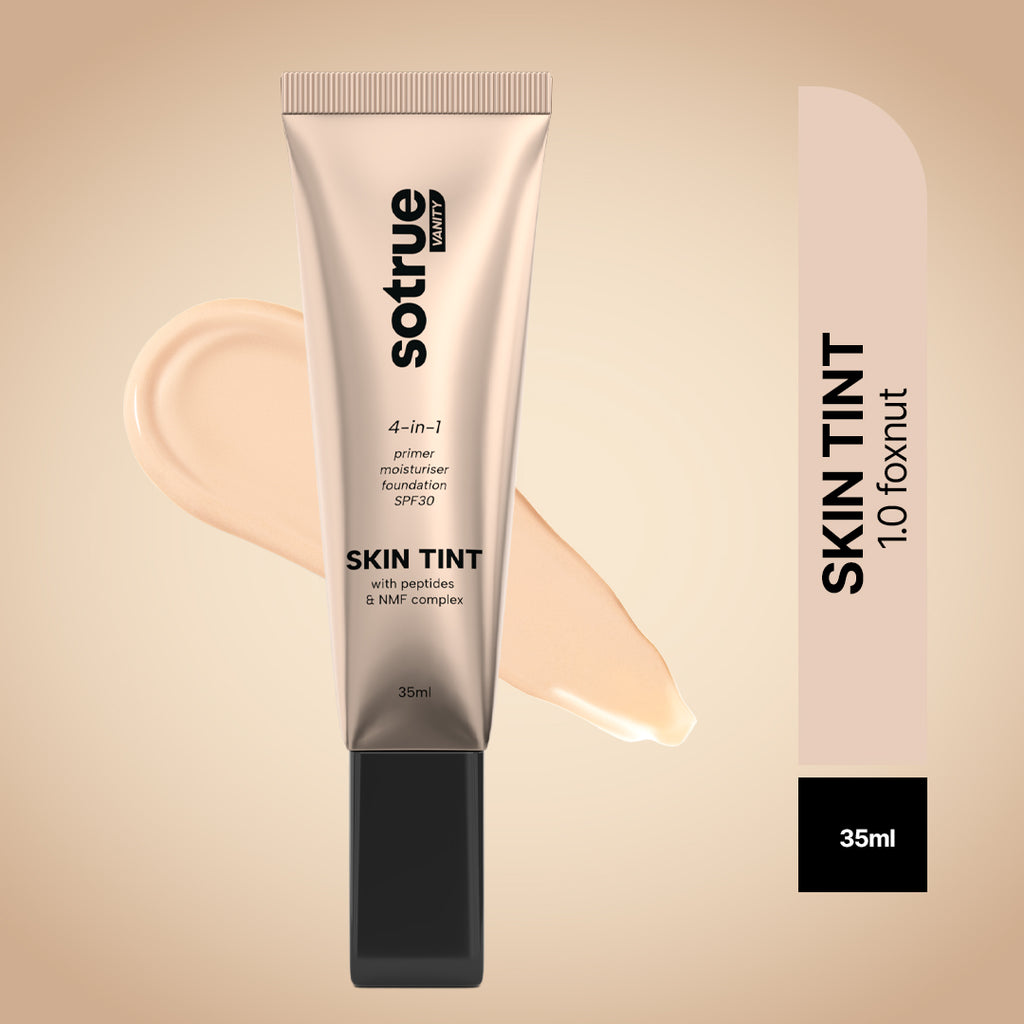
That's different from how a full-coverage base is generally understood to work, where the goal is often to conceal as much of the original skin texture as possible. A skin tint runs on the opposite idea: less product, more skin, buildable coverage only where you actually want it. That's also what makes it a good starting point if you're new to base makeup, or simply want faster mornings. Sotrue's 4-in-1 Skin Tint is built around this light-to-medium, buildable, dewy-finish idea, so it works whether you dab on a thin layer for a Tuesday school run or build it up a little for a family function.
Breaking Down the "4-in-1" Claim
The "4-in-1" in the name isn't a marketing flourish. It refers to four specific jobs this one product is formulated to do:
- Primer, prepping the base of your skin before colour goes on.
- Moisturiser, adding hydration in the same step, instead of a separate cream underneath.
- Tint or coverage, evening out tone with light-to-medium, buildable coverage and a dewy finish.
- SPF 30 sun protection, built into the same formula, so it isn't a separate step you have to remember.
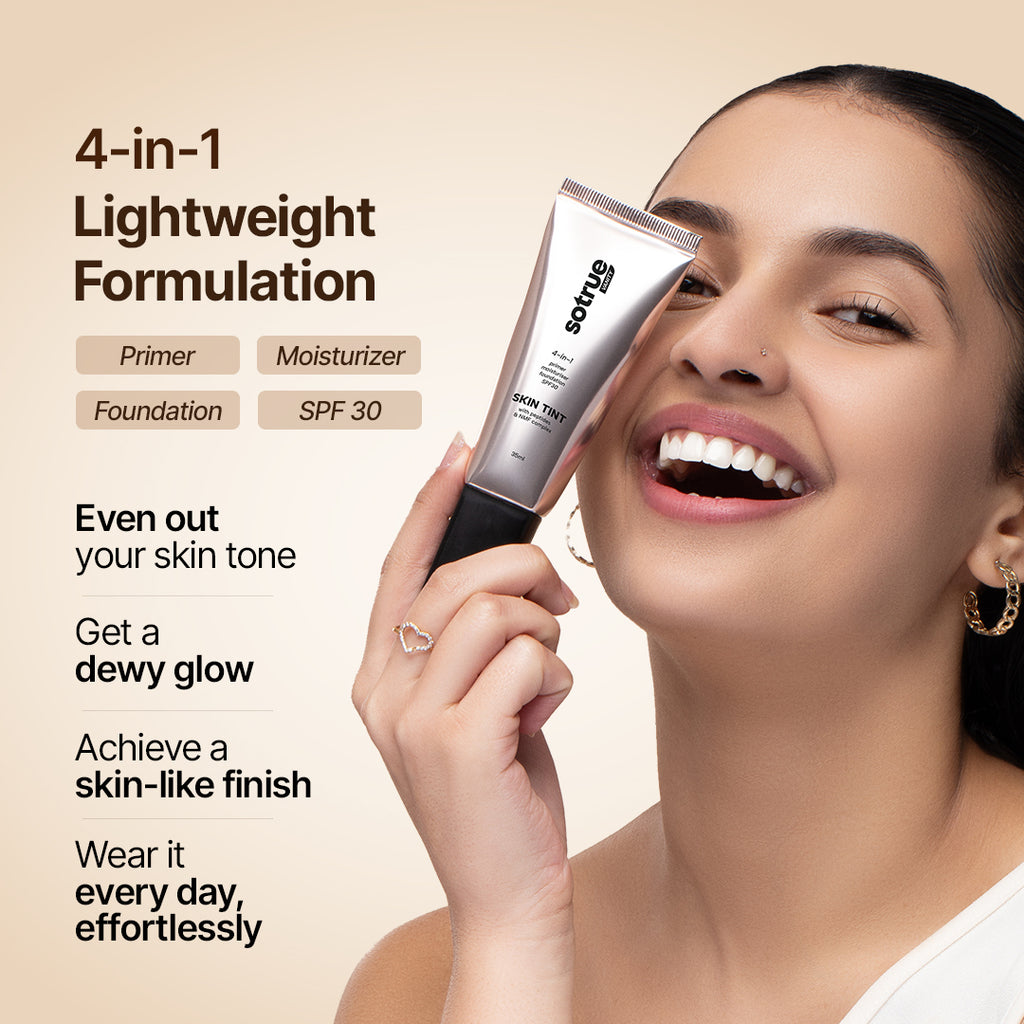
In practice, that means one product doing the work that would otherwise need a primer, a moisturiser, a base, and a sunscreen applied separately. That's the entire promise of "4-in-1," nothing more and nothing less. It isn't a foundation, concealer, and highlighter rolled into one, and it doesn't claim to replace a full skincare routine either. It's specifically these four functions: primer, moisturiser, tint, and SPF 30.
Why the No-Makeup-Makeup Look Has Taken Over
The "no-makeup-makeup" look is exactly what it sounds like: makeup doing quite a lot of work while appearing like barely any is on. The aim isn't to hide skin, but to let it look a little more even, a little more awake, and still recognisably yours.
This shift has been visible in how Bollywood actresses present themselves day to day, favouring a bare-faced, skin-first aesthetic over heavy, fully matte coverage, according to ELLE India. The same piece notes that the rise of skin tints and other multipurpose base products has made this natural finish easier to achieve, particularly in India's hot and humid weather, where heavier bases can feel cakey by afternoon.1
For many Indian women juggling work, home, and everything in between, this idea has appeal beyond aesthetics. There isn't always fifteen minutes for a full base routine before heading out the door. A skin tint fits that reality: it evens things out, doesn't sit heavy, and doesn't announce "makeup on" the way a fuller base sometimes can.
Who Should Actually Use a Skin Tint?
A skin tint isn't the right product for every situation, and it helps to be honest about that.
It tends to suit you if:
- You want skin to look more even, not covered up.
- You prefer a dewy finish over a fully matte one.
- You're looking for something built for daily wear, not just special occasions.
- You'd rather do one step in the morning than three or four.
- You want sun protection built into your base instead of applying it separately.
It may suit you less if:
- You're looking to conceal significant texture or pigmentation, where a fuller-coverage base built for that purpose may serve you better.
- You specifically want a fully matte, long-set finish rather than a dewy one.
For most married women managing a busy household and a full day outside it, and even for the occasional "shaadi-ka-glow" relative who wants to look put together without a full glam session, a skin tint hits a comfortable middle ground: buildable enough to go from a light everyday layer to a slightly more built-up look for a function, using the same one product.
How to Apply a Skin Tint, Step by Step
- Start with clean, dry skin. Wash your face as usual and pat it dry.
- Take a small amount. A pea-sized amount is usually enough to start with, since coverage is buildable.
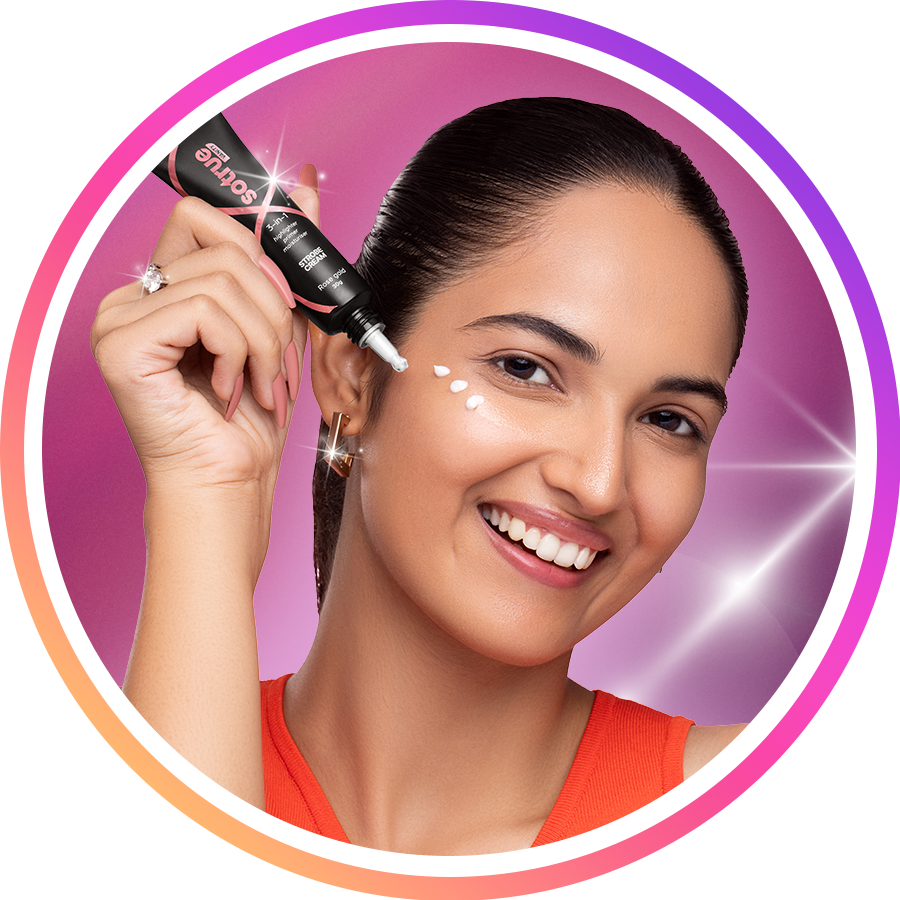
- Dot and blend. Dot it across your forehead, cheeks, nose, and chin, then blend outward using fingertips, a damp sponge, or a brush, whichever you're most comfortable with.
- Build only where needed. For a touch more coverage around uneven areas, pat on a little extra there rather than reapplying all over.
- Let it settle. Give it a minute to sit into skin before moving on, like a touch of concealer under the eyes or a cream blush, if you use one.
- Reapply through the day if needed. Since the SPF 30 in the formula is part of sun protection, dermatologists generally recommend reapplying sunscreen through the day during extended sun exposure, the same as with any other SPF product.
There's no elaborate layering technique required here, which is largely the point of a product built to save time.
What This Looks Like on an Ordinary Day
Strip away the terminology, and here's what a 4-in-1 skin tint does on an ordinary day: it preps skin with a primer step, adds moisturiser so skin isn't left dry, evens out tone with light-to-medium buildable coverage in a dewy finish, and carries SPF 30 so you aren't stepping out unprotected. All of that happens in one step, in roughly the time it would normally take to apply just one product.
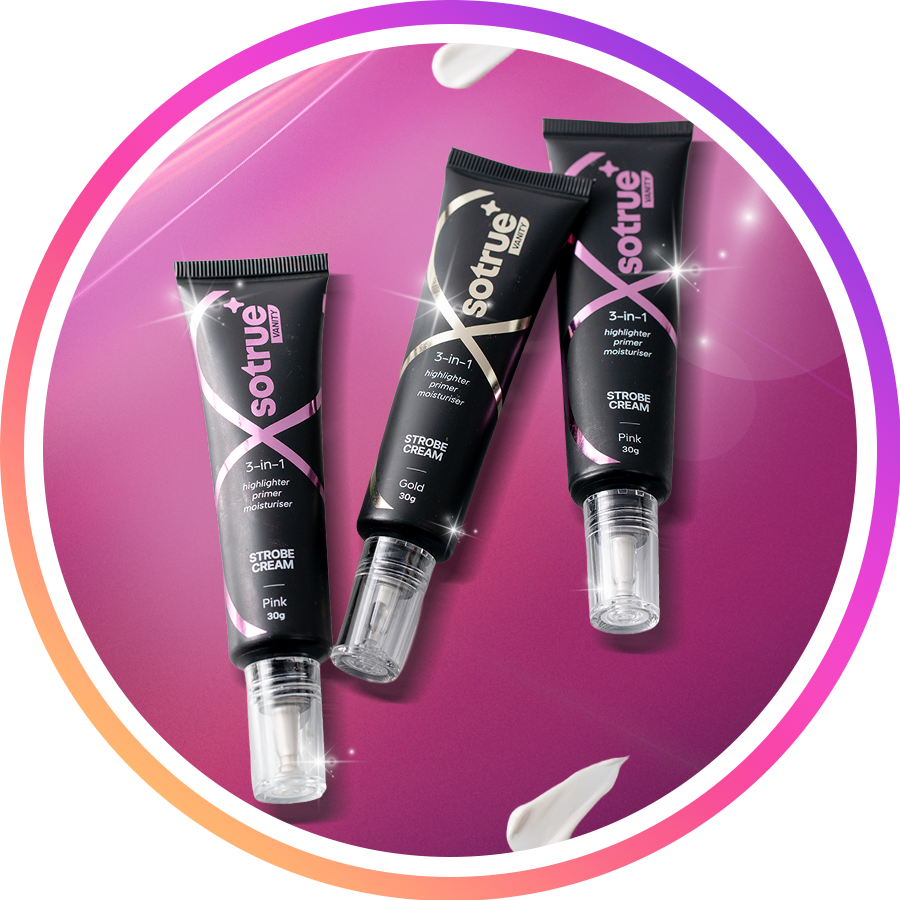
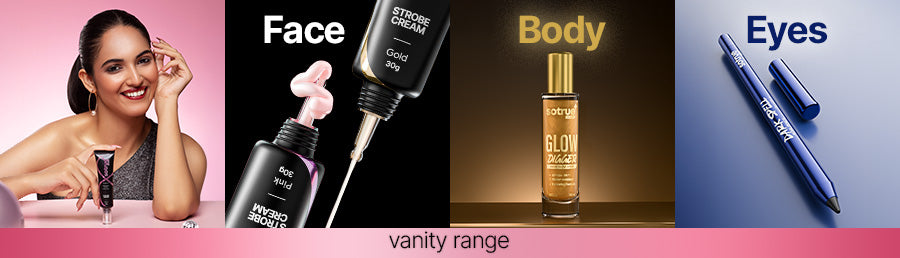
For an everyday routine, or to pair with a highlighter for extra glow on days that call for it, the Go-to Glow Combo (Skin Tint and Strobe Cream) bundles the two together.
A quick note on safety: this is a skin-contact product with SPF, so a patch test is recommended before your first full use, especially if you have sensitive skin. Individual results can vary from person to person, and this article isn't medical advice. If you have specific skin concerns, it's worth checking with a dermatologist.
Frequently Asked Questions
Is a skin tint the same as a foundation?
Not quite. A skin tint is generally lighter and sheerer, built to let natural skin show through with an even tone, rather than to fully conceal it. It's buildable, so you can add more where needed, but it's designed around a lighter base to begin with.
Does the Sotrue 4-in-1 Skin Tint have SPF?
Yes. It carries SPF 30 as one of its four functions, alongside primer, moisturiser, and tint or coverage, in the same formula.
Can I use a skin tint every day, or is it only for special occasions?
It's designed to work for both. On an ordinary day, a thin layer keeps things light and even. For a function or special occasion, you can build up the coverage a little more using the same product.
How much coverage does the Sotrue 4-in-1 Skin Tint give?
It's formulated for light-to-medium coverage that's buildable, with a dewy finish rather than a matte one.
Do I still need to wear a separate sunscreen if I'm using this skin tint?
The formula includes SPF 30 as one of its four built-in functions. If you're going to be out in strong sun for long stretches, it's generally a good habit to reapply sun protection through the day, the same as with any SPF product.
Is the Sotrue 4-in-1 Skin Tint vegan or cruelty-free?
Not currently. Sotrue's only published vegan and cruelty-free certification today covers the 3-in-1 Illuminating Strobe Cream, not the Skin Tint.
Sources
- American Academy of Dermatology, "How to Select a Sunscreen", on the recommendation to choose a broad-spectrum sunscreen with SPF 30 or higher.
- ELLE India, "No Makeup Look: Why The Bare-Faced Aesthetic Is Defining B-Town Beauty", on the shift toward bare-faced, skin-first looks and the role of skin tints in that trend.


